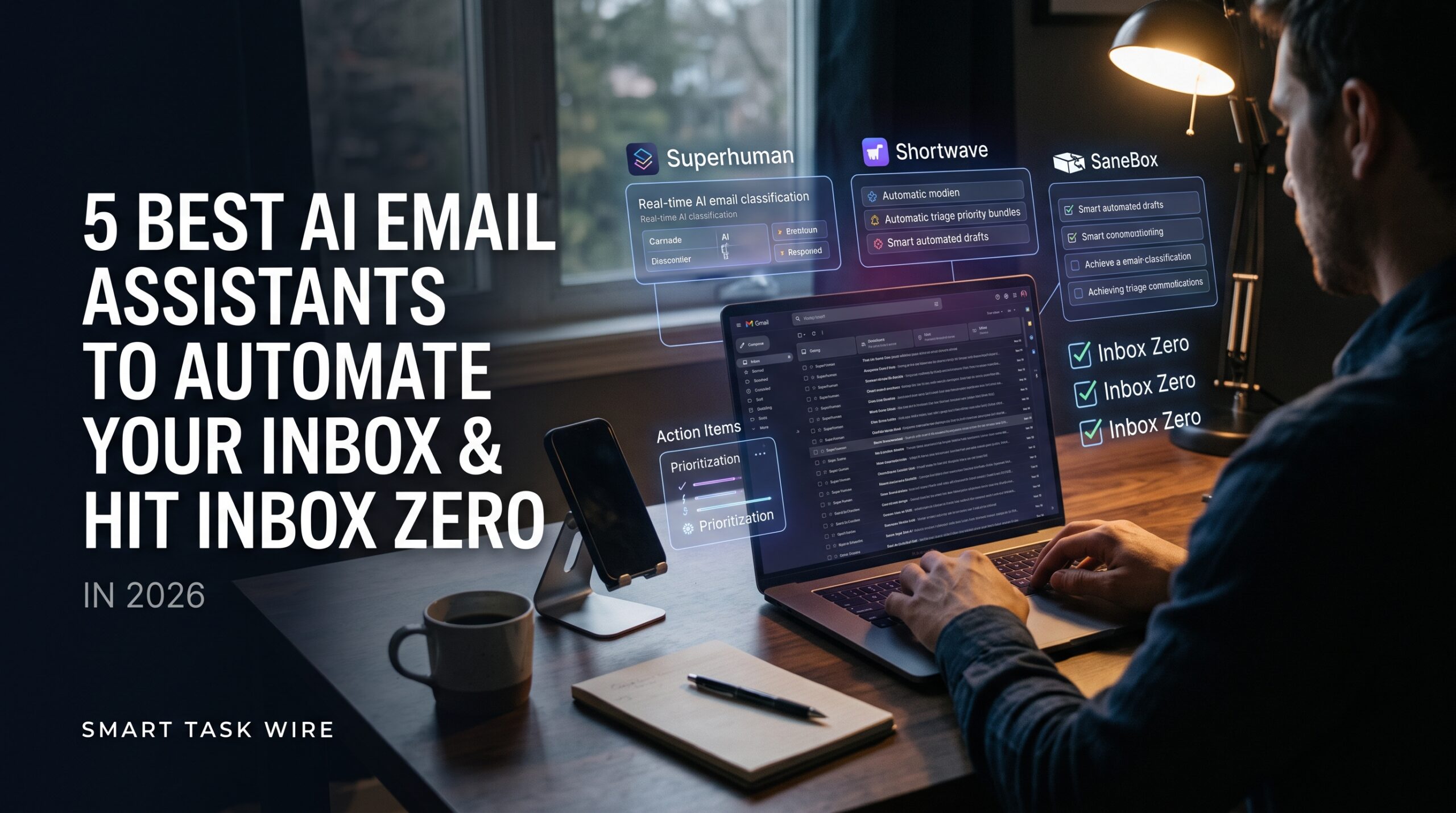
Finding the best ai email assistants has become the single most effective way to eliminate daily communication overload, stop repetitive reply drafting, and consistently maintain Inbox Zero. Most executives, operators, and knowledge workers lose up to three hours every day sorting through unsolicited cold pitches, calendar scheduling back-and-forth, vendor receipts, and long discussion threads.
Traditional inbox rules and static keyword filters are too rigid to solve modern communication bottlenecks. In contrast, deploying the best ai email assistants introduces semantic understanding directly into your email client. Modern intelligent assistants analyze sender intent, categorize inbound mail by real urgency, synthesize multi-party email threads, and draft contextual replies that adapt to your personal voice and tone.
Whether you run your workflows inside Google Workspace, Microsoft Outlook, or an Apple Mail desktop client, picking the right platform makes an immediate difference. In this benchmark, we test and rank the top five tools designed to triage unread mail, draft contextual messages, and automate your inbox management.
Why Modern Professionals Rely on the Best AI Email Assistants
Table of Contents
Managing an inbox manually forces you into a perpetual state of reactionary interruption. Every incoming notification demands cognitive triage: Is this urgent? Who needs to follow up? What context is missing?
When you adopt the best ai email assistants, your email software transitions from a cluttered message dump into an automated workflow engine:
- Autonomous Priority Triage: Machine learning algorithms categorize incoming emails into priority tiers—separating actionable client inquiries from passive company newsletters and promotional noise.
- Voice-Matched Response Generation: Intelligent assistants review your previous sent messages to craft draft responses that reflect your phrasing, closing remarks, and communication style.
- Conversational Thread Synthesis: Rather than reading through 25 nested email chains after a vacation, you can read a 3-bullet executive summary highlighting key decisions and open questions.
Deploying these smart systems saves hours of clerical typing while ensuring critical client communications are never neglected.
1. Superhuman: Best for Blazing-Fast Keyboard Triage and Executive Auto Drafts
Superhuman remains the premier high-velocity email client for founders, corporate executives, and sales leaders processing hundreds of inbound messages every single day.
- Primary Strength: Sub-100ms keyboard interactions, background “Auto Drafts”, and natural-language inbox search.
- How It Operates: Superhuman connects with both Gmail and Microsoft Outlook accounts. It pairs a distraction-free user interface with a background AI engine that analyzes incoming emails and prepares contextual replies before you even open the message.
- Standout Feature: “Auto Drafts.” On business plans, the platform monitors your threads, determines whether a response is required, and prepares a finished draft in your specific communication style. When you open the thread, you simply review, adjust if necessary, and press send.
- Search Capability: Its “Ask AI” tool allows you to query your entire communication archive in plain English (e.g., “What did Sarah say about our Q3 budget limits?”) and get immediate answers with links to original messages.
- External Resource: Explore keyboard shortcuts and enterprise features on the official Superhuman platform.
- Pricing Structure: Plans start at $30/user/month (Starter) or $40/user/month (Business).
2. Shortwave: Best for Gmail Power Users, Task Bundles, and Semantic History Search
Created by former Google engineers who built Google Inbox, Shortwave reimagines email as a streamlined task manager paired with deep conversational intelligence.
- Primary Strength: Inbox thread bundling, deep conversational search, and team coordination.
- How It Operates: Shortwave synchronizes natively with Google Workspace and personal Gmail accounts. It bundles automated notifications, marketing emails, and GitHub updates into structured clusters that you can review or archive with a single gesture.
- Standout Feature: AI Assistant Sidebar. Shortwave features an integrated chatbot that can answer factual questions across years of your Gmail history, summarize attached PDF documents, and verify meeting availability via Google Calendar.
- Internal Resource: To connect your email triage into a broader morning dashboard, follow our guide on how to build an automated daily briefing using AI.
- Pricing Structure: 14-day free trial; paid business tiers start at $30/user/month ($24 billed annually).
3. SaneBox: Best for Invisible, Multi-Client Server-Side Filtering
If you want an organized inbox without abandoning your current email software—such as Apple Mail, desktop Outlook, or Thunderbird—SaneBox is the ideal solution.
- Primary Strength: Provider-agnostic background email sorting without changing email clients.
- How It Operates: SaneBox operates quietly on the server level using IMAP protocols. It reads email header metadata (without analyzing the body content of your messages) to understand who you correspond with regularly and who you ignore.
- Standout Feature: “SaneBlackHole.” Move an unwanted newsletter into the SaneBlackHole folder once, and the service unsubscribes you from the sender and directs all future correspondence from them straight to your trash.
- Internal Resource: If you also need to streamline browser workflows alongside your inbox, check out the top AI Chrome extensions to save hours weekly.
- Pricing Structure: Flexible packages range from $3.49/month for light users up to $36/month for multi-account power users.
4. Read AI: Best for Cross-Channel Context Between Email and Video Calls
Read AI connects your incoming email threads with what was actually discussed in your live virtual meetings.
- Primary Strength: Unifying action items, calendar context, and email summaries across platforms.
- How It Operates: Read AI connects across conferencing platforms and corporate email inboxes. It scans communication channels to build an active knowledge graph of projects, deliverables, and team commitments.
- Standout Feature: Cross-Platform Action Item Reconciliation. If a client sends an email asking for an updated presentation, Read AI highlights the exact video call and slide discussion where that deliverable was originally planned.
- Internal Resource: To capture high-fidelity transcripts from your client calls, review our tested list of the best AI meeting assistants to transcribe and summarize calls.
- Pricing Structure: Free tier provides basic monthly summaries; paid team plans start at $19.75/user/month.
5. Gmelius: Best for Google Workspace Collaboration and Shared Team Inboxes
Gmelius turns standard Gmail into an automated help desk, sales pipeline, and project collaboration system without forcing your team into complex third-party software.
- Primary Strength: Shared team inboxes, automated routing rules, and internal email notes.
- How It Operates: Gmelius integrates as an invisible collaboration layer inside Gmail. Teams managing addresses like
sales@orsupport@can assign incoming emails, leave private notes on threads, and monitor response metrics together. - Standout Feature: Automated Workflow Sequences. Gmelius allows you to create natural-language routing rules that assign emails, trigger auto-replies, and sync updates to company Slack channels automatically.
- Internal Resource: To store meeting takeaways and client SOPs connected to your email inbox, explore the best AI note taking apps to build a second brain.
- Pricing Structure: Paid plans start at $19/user/month for shared workspace automation.
Feature Comparison: The Best AI Email Assistants Compared
To determine which of the best ai email assistants matches your workflow needs, review this head-to-head comparison:
| Platform | Supported Providers | Interface Model | Primary Focus | Best Use Case |
| Superhuman | Gmail & Outlook | Standalone App / Web | Rapid Keyboard Triage | Executives & High-Volume Senders |
| Shortwave | Gmail Only | Standalone Web / Mobile | Task Bundles & AI History Search | Google Workspace Teams & Founders |
| SaneBox | Any Provider (IMAP) | Background Cloud Server | Noise Filtering & Sorting | Users Who Love Native Mail Clients |
| Read AI | Multi-Platform | Background Analytics | Meeting & Email Context Link | Cross-Functional Team Managers |
| Gmelius | Google Workspace | Native Gmail Extension | Shared Inboxes & Automation | Customer Support & Operations |
Best Practices to Safely Automate Your Email Inbox
Deploying automated email software requires proper configuration to protect communication security:
- Verify Drafts Before Sending: Even with advanced personal voice training, always review auto-generated email drafts before sending them to high-stakes enterprise clients or investors.
- Review Data Privacy Clauses: Verify that your chosen platform does not use your private email messages to train public AI foundation models.
- Audit Inactive Rules Regularly: Every month, review automated snooze settings, unsubscription blacklists, and sorting labels to ensure valid client inquiries are never archived by mistake.
- Coordinate With Spreadsheet Trackers: If you process inbound order receipts or invoice approvals, pair your inbox automation with tools that automate Excel and Google Sheets with AI for hands-free data logging.
Frequently Asked Questions About the Best AI Email Assistants
Can an AI email assistant write in my authentic personal tone?
Yes. Modern assistants like Superhuman and Shortwave evaluate your past sent correspondence, vocabulary choices, and greeting structures to craft drafts that match your natural style.
Is my private email data safe when using these tools?
Leading platforms adhere to SOC 2 compliance, utilize end-to-end encryption, and operate under zero-retention policies that prevent your messages from training public models. SaneBox is unique in that it only analyzes header metadata, meaning its servers never read the body of your emails.
Which tool is best for achieving Inbox Zero?
If you process high volumes of email and want keyboard-first triage, Superhuman is the fastest. If you want your email grouped into clear, clearable bundles inside Gmail, Shortwave is the top alternative.
Final Recommendation
Reclaiming your focus no longer requires spending hours sorting through an overflowing inbox.
- If you need uncompromising processing speed, keyboard shortcuts, and ambient auto-drafts, choose Superhuman.
- If you run on Google Workspace and want powerful semantic thread search, set up Shortwave.
- If you want server-side noise reduction without switching your current email app, activate SaneBox.
Deploying one of the best ai email assistants keeps your inbox organized, ensures prompt replies to critical contacts, and makes hitting Inbox Zero a daily reality.
5 Best AI Research Tools to Analyze PDFs, Papers, and Reports in Seconds