Vitamin K Deficiency Bleeding (VKDB): Inside the AI-Driven Pediatric Diagnostic & Care Workflows of 2026
Table of Contents
In neonatal medicine, time is the ultimate variable. Vitamin K Deficiency Bleeding (VKDB)—formerly known as hemorrhagic disease of the newborn—is a rare but potentially catastrophic condition that occurs when infants have insufficient vitamin K to activate their blood’s coagulation factors. This can lead to spontaneous, life-threatening internal bleeding, including intracranial hemorrhage.
Fortunately, this condition is highly preventable. For decades, the standard preventative measure has been a single intramuscular injection of vitamin K administered at birth.
However, clinical execution is rarely simple. Overcoming parental hesitancy, tracking outpatient refusals, monitoring high-risk home births, and identifying early subtle symptoms can challenge busy maternity wards.
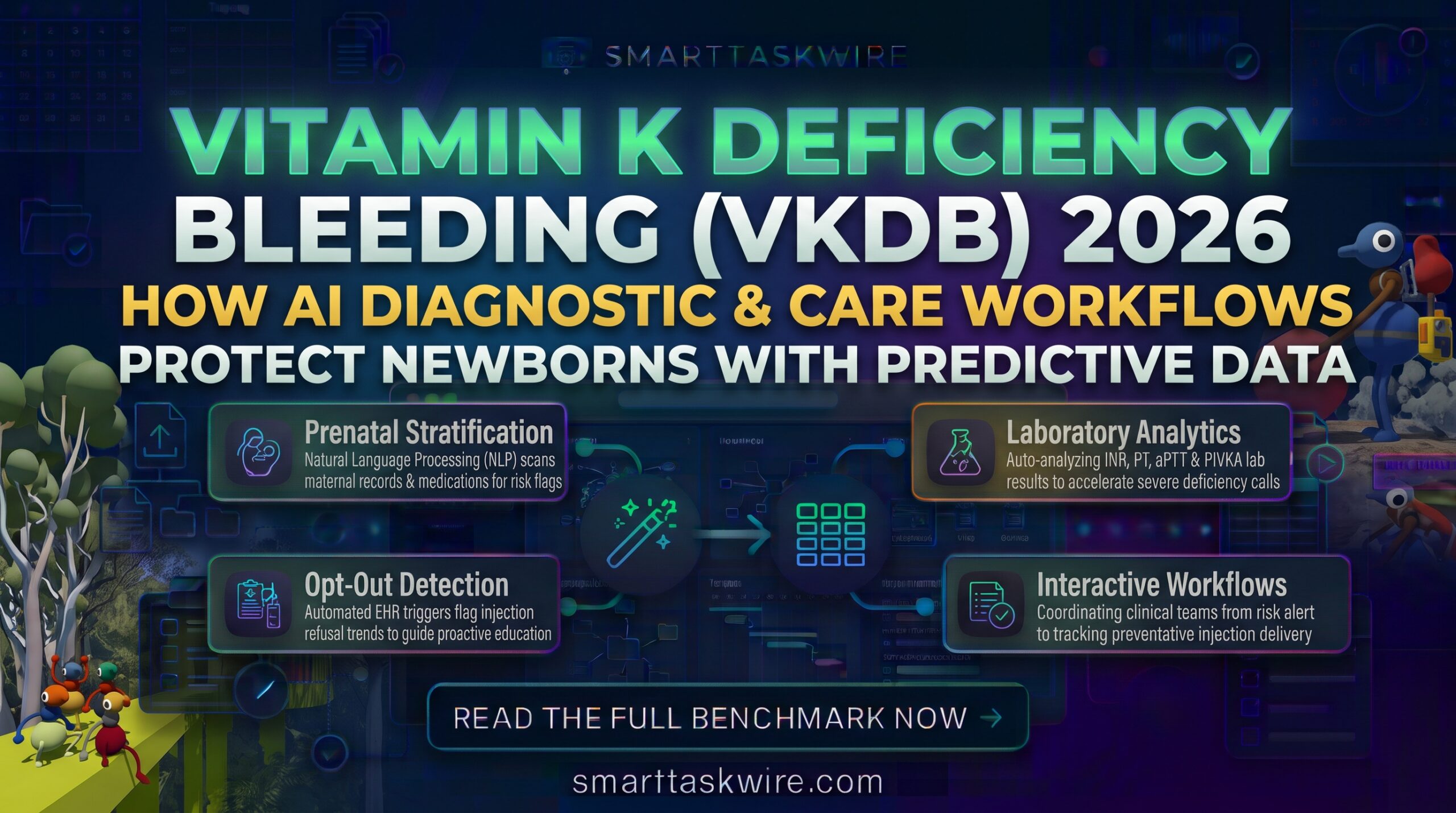
In 2026, vitamin k deficiency bleeding 2026 screening and risk prediction are undergoing a digital transformation. Modern pediatric workflows are integrating artificial intelligence directly into Electronic Health Records (EHRs) and maternal-fetal databases. By combining natural language processing, predictive risk scoring, and automated decision-making pipelines, clinical teams can predict, identify, and prevent VKDB before a crisis occur.
Understanding how data-driven medical teams deploy ML algorithms can help protect newborn infants and preserve peace of mind for new families.
The VKDB AI Diagnostic and Care Pipeline
| Pipeline Stage | Technology / Models Used | Key Clinical Data Inputs | Key Medical Output |
| Prenatal Stratification | Transformer NLP (BERT/LLM parsing) | Maternal medical records, medication logs | High-risk category flags |
| Bypass & Refusal Alerts | EHR Trigger Rule Engines | Pediatric opt-out documentation | Real-time pediatric notifications |
| Clinical Classification | Gradient-Boosted Trees (XGBoost) | Feed patterns, bruising, circumcision checks | Early, Classic, or Late-onset VKDB classification |
| Acute Coagulation Check | Automated Laboratory Analytics | PT, aPTT, INR, and PIVKA results | Urgent therapeutic dosing alerts |
Step 1: Prenatal Risk Identification via Natural Language Processing (NLP)
Most cases of Late VKDB (occurring from 2 to 24 weeks of life) happen in babies who did not receive the preventive shot at birth, often due to natural or unmonitored home births, or explicit parental refusal. Furthermore, babies born to mothers on specific medications (such as anticonvulsants, anticoagulants, or anti-tuberculosis drugs) are at a higher risk of early-onset VKDB, as these substances can interfere with the baby’s ability to use vitamin K.
Advanced neonatal algorithms analyze maternal medical histories before delivery.
Natural Language Processing (NLP) engines scan unstructured doctor notes, prescription histories, and prenatal intake forms for risk-related keywords:
- Contraindicated Medications: Flagging prenatal exposure to anticonvulsants (like carbamazepine) or antituberculars (like rifampin) that block placental vitamin K transfer.
- Risk Markers: Scraping indications of maternal malabsorption (such as Crohn’s disease or bariatric surgery) that severely deplete maternal vitamin K reserves.
- Refusal Tracking: Scanning maternal intent-to-treat forms for phrases indicating “natural birth preferences” or “opt-out” requests to proactively notify pediatric educators for early clinical conversations.
Plaintext
[ Electronic Health Records (EHR) Ingestion ]
                    │
                    ▼
┌────────────────────────────────────────────────────────┐
│               Maternal-Fetal NLP Parser                │
│  • Screen prenatal records for contraindicated meds     │
│  • Identify maternal malabsorption & GI histories      │
│  • Detect parental "natural birth" injection opt-outs  │
└────────────────────────────────────────────────────────┘
                    │
                    ▼
[ Pediatric Predictive Models & EHR Alerts ]
                    │
                    ▼
[ Active Care Workflows (Education, Injection, Verification) ]
Step 2: Predictive Clinical Classification & Alerts
Neonatal AI pipelines process postpartum tracking logs to classify and address VKDB risks based on the timing of symptom onset:
1. Early-Onset VKDB (First 24 Hours)
Often linked to maternal medication exposure. AI engines automatically track high-risk deliveries and alert the neonatal intensive care unit (NICU) to check for early symptoms (such as cephalhematoma or bleeding at the umbilical site) right from birth.
2. Classic VKDB (Days 1 to 7)
Frequently seen in babies who are exclusively breastfed and did not receive a vitamin K shot. If an infant is discharged without the preventive injection, the EHR algorithm automatically triggers an alert on the pediatrician’s outpatient dashboard to prioritize checks for bruising, gastrointestinal bleeding, or bleeding from circumcision.
3. Late-Onset VKDB (Weeks 2 to 24)
While classic VKDB typically presents with visible bleeding, late-onset VKDB (often presenting as intracranial hemorrhage) can show subtle, gradual symptoms. When infants with untreated VKDB are brought to the emergency department or clinic, machine learning models analyze their history for early signs (such as poor feeding, lethargy, or jaundice) to alert physicians to consider late-onset VKDB.
Step 3: Analyzing Laboratory Coagulation and Intervention Results
If an AI alert or clinical examination suggests VKDB, the clinical team runs urgent laboratory tests. Modern pathology systems run these tests through automated analytic loops to deliver rapid, accurate results:
- INR (International Normalized Ratio): The system tracks INR elevation (which can exceed 4.0 or 5.0 in severe cases) to determine clotting time delay.
- Prothrombin Time (PT) and aPTT: The ML systems identify prolonged times compared to standard age-matched neonatal metrics, alerting the care team to potential clotting issues.
- PIVKA-II Test (Protein Induced by Vitamin K Absence): By detecting inactive clotting proteins, this test helps confirm vitamin K deficiency as the root cause, distinguishing VKDB from other congenital bleeding disorders.
Once VKDB is confirmed, the system verifies the administration of therapeutic intravenous or subcutaneous vitamin K, tracking recovery and post-treatment INR normalization.
Why Neonatal Disease Prediction Requires Human-in-the-Loop Oversight
No matter how advanced pediatric AI screening becomes, clinical decisions must always combine algorithmic alerts with human experience:
- Symptomatic Mimicry: Early signs of bleeding or jaundice can easily overlap with other newborn conditions (like sepsis or trauma), requiring careful clinical differentiation.
- Consent and Cultural Nuance: Medical communication requires deep empathy and clear explanation. Pediatric and nursing teams are essential in addressing parental concerns with evidence-based guidance.
- Physical Assessments: Algorithms can organize data, but they cannot replace a hands-on physical exam (such as checking for fontanelle bulging or petechiae) performed by a skilled nurse or physician.
Designing Safe Digital Healthcare Pipelines
The machine learning and workflow architectures used to track neonatal health rely on the same technology stacks powering enterprise digital workspaces:
- Leverage AI for Prompt Data Research: Conduct verified, citation-based research on medical literature using the best Search-to-Research AI Engines 2026.
- Build Safe, Non-Intrusive Workflow Automation: Trigger clinical checklist templates and patient follow-up scripts with Best Low-Code AI Workflow Automation Tools in 2026.
- Draft Interactive Medical Dashboards: Rapidly build and test visual data portals for providers with Vibe Coding Tools 2026.
Combining rigorous medical protocols with intelligent predictive frameworks ensures healthcare providers can identify patient needs early, deliver essential preventive care, and provide newborns with the safest possible start in life.
Heat vs Jazz AI Prediction 2026: How Machine Learning Forecasts NBA Games in 2026